

Workshop Details
Workshop on Co-Development of Computer Science and Law
- Start Date: November 11, 2020
- End Date: November 13, 2020
- Event Start Time: 12:00 PM
- Event End Time: 5:00 PM
- Organizers: David Pennock | Joshua Kroll | Joan Feigenbaum
- Location:
Online Event
-
Sophisticated computation, embedded in a variety of sociotechnical systems, has become an essential enabler of everyday life. As such systems have become more powerful and more present, the interdisciplinary research area of computer science and law has begun to take shape. This workshop will explore establishing rigorous foundations for this emerging interdisciplinary area. It will focus on the need for co-development of computational techniques and legal principles, using the strengths of each approach to compensate for known weaknesses in both and building shared understanding, methodology, and vocabulary to improve communication and catalyze research across the two disciplines.
The workshop will consider how to create technical definitions and solutions in concert with the creation of legal language so that the two fields can work together to solve (and proactively prevent) problems. Ideally, computer scientists and lawyers should collaborate to create legislative language and technical definitions that are consistent and that capture broadly agreed-upon principles. For example, technical considerations and definitions embedded in legislation should reflect what is technically feasible and not mandate impossible requirements, while implementations of such requirements should produce sufficient evidence that their behavior sits within stated requirements and thus complies with the law.
The workshop will be a next step in the development of a research community in computer science and law that brings together computer scientists, statisticians, law scholars, and social scientists studying sociotechnical assemblages and their governance.
View videos of the workshop presentations on Youtube.
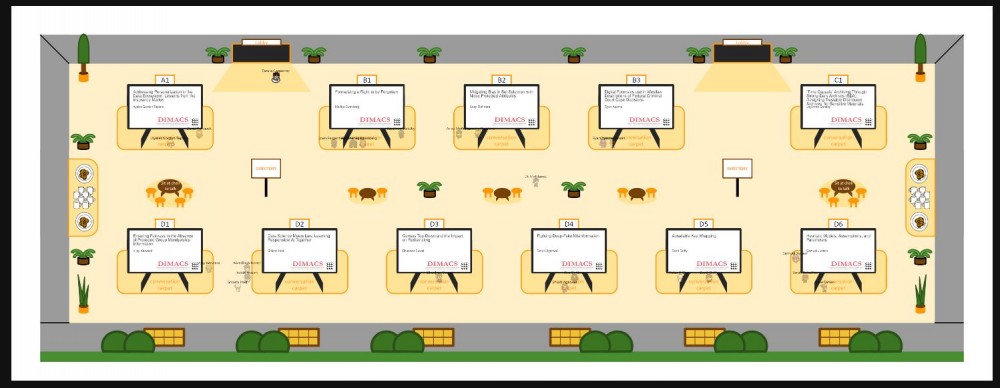
Check out the posters session:
Lightning Talks
Data Monopolies: How to Decentralize Big Tech with Privacy-Enhancing Technologies
Sunny Seon KangAd Delivery Algorithms: The Hidden Arbiters of Exposure to Opportunities and Political Messaging
Aleksandra Korolova, University of Southern CaliforniaThe Problem of Unduly Accurate Algorithms
Aileen Neilsen, Center for Law and Economics, ETH Zurich
Posters
Fighting Deep-Fake Misinformation
Shruti Agarwal, University of California, BerkeleyDigital Forensics use in Westlaw Descriptions of Federal Criminal Court Case Decisions
Ryan Aponte, University of FloridaAddressing Personalization in the Data Ecosystem; Lessons from the Insurance Market
Ayelet Gordon-TapieroAbradable Key Wrapping
Scott Griffy, IntelData Science Meets Law: Learning Responsible AI Together
Shlomi Hod, Boston UniversityHeuristic Models, Assumptions, and Parameters
Samuel Judson, Yale UniversityEnsuring Fairness in the Absence of Protected Group Membership Information
Vijay Keswani, Yale UniversityMitigating Bias in Set Selection with Noisy Protected Attributes
Anay Mehrotra, Yale University‘Time Capsule’ Archiving Through Strong Dark Archives (SDA): Designing Trustable Distributed Archives for Sensitive Materials
Jayshree Sarathy, Harvard UniversityCensus Top-Down and the Impact on Redistricting
Bhushan Suwal, Tufts UniversityFormalizing a Right to be Forgotten
Marika Swanberg, Boston University -
Tuesday, November 10, 2020
Workshop Talks
12:00 PM – 12:15 PMWelcome and Opening Remarks
12:15 PM – 1:00 PMCPU, Esq: Should Law Be More Like Software? A Fireside Chat with Solon Barocas (Microsoft Research)
James Grimmelmann - Cornell University
1:00 PM – 1:15 PMBreak
1:15 PM – 2:00 PMProtecting Cryptography Against Compelled Self-Incrimination
Sarah Scheffler - Boston University
2:00 PM – 2:45 PMBeyond Talismanic Governance: The Utility of Structured Disclosures about Software Systems
Joshua Kroll - Naval Postgraduate School
2:45 PM – 3:00 PMBreak
3:00 PM – 4:00 PMCareer Opportunities Panel. Moderated by Joan Feigenbaum (Yale University)
Lisa Zhang - Nokia Bell Labs , Janice Tsai - Mozilla , Reggie Sheehan - National Science Foundation , Paul Ohm - Georgetown University , Ron Hedges - Dentons , Stacey Dogan - Boston University , Solon Barocas - Microsoft Research
Solon Barocas, Microsoft Research
Stacey Dogan, Boston University
Paul Ohm, Georgetown UniversityReggie Sheehan, National Science Foundation
Janice Tsai, worked at Mozilla and Microsoft
Lisa Zhang, Bell Labs
4:00 PM – 4:15 PMBreak
4:15 PM – 5:00 PMProving Legal Theorems
Aloni Cohen - Boston University
Wednesday, November 11, 2020
Workshop Talks
12:00 PM – 12:45 PMWhat Cybersecurity Policy Would Look Like if We Could Actually Measure Cyber Risk
Daniel Weitzner - Massachusetts Institute of Technology
12:45 PM – 1:30 PMIntellectual Debt: What's Wrong When Machine Learning Gets It Right
Jonathan Zittrain - Harvard University
1:30 PM – 2:30 PMVerifying Algorithmic Claims: Legal Significance?
Shafi Goldwasser - University of California, Berkeley
2:30 PM – 3:00 PMBreak and Social Gathering
3:00 PM – 4:00 PMData Co-Ops: Challenges, and How to Get There
Kobbi Nissim - Georgetown University , Katrina Ligett - Hebrew University of Jerusalem
4:00 PM – 4:30 PMLightning Talks and Poster Previews
Lightning Talks
Data Monopolies: How to Decentralize Big Tech with Privacy-Enhancing Technologies
Sunny Seon KangAd Delivery Algorithms: The Hidden Arbiters of Exposure to Opportunities and Political Messaging
Aleksandra Korolova, University of Southern CaliforniaThe Problem of Unduly Accurate Algorithms
Aileen Neilsen, Center for Law and Economics, ETH Zurich
Posters
Fighting Deep-Fake Misinformation
Shruti Agarwal, University of California, BerkeleyDigital Forensics use in Westlaw Descriptions of Federal Criminal Court Case Decisions
Ryan Aponte, University of FloridaAddressing Personalization in the Data Ecosystem; Lessons from the Insurance Market
Ayelet Gordon-TapieroAbradable Key Wrapping
Scott Griffy, IntelData Science Meets Law: Learning Responsible AI Together
Shlomi Hod, Boston UniversityHeuristic Models, Assumptions, and Parameters
Samuel Judson, Yale UniversityEnsuring Fairness in the Absence of Protected Group Membership Information
Vijay Keswani, Yale UniversityMitigating Bias in Set Selection with Noisy Protected Attributes
Anay Mehrotra, Yale University‘Time Capsule’ Archiving Through Strong Dark Archives (SDA): Designing Trustable Distributed Archives for Sensitive Materials
Jayshree Sarathy, Harvard UniversityCensus Top-Down and the Impact on Redistricting
Bhushan Suwal, Tufts UniversityFormalizing a Right to be Forgotten
Marika Swanberg, Boston University4:30 PM – 5:30 PMPoster Session
5:30 PM – 6:00 PMSocial Event
Thursday, November 12, 2020
Workshop Talks
12:00 PM – 12:45 PMAssessing the Reliability of Clothing-Based Forensic Identification
Hany Farid - University of California, Berkeley
12:45 PM – 1:30 PMAutomated Contact Tracing: Individualism, Society, Law and Technology in an Aerosol Droplet
Ran Canetti - Boston University
1:30 PM – 2:00 PMBreak
2:00 PM – 2:45 PMSurveillance, Privacy and Social Control
Marilyn George - Brown University
2:45 PM – 3:30 PMExplainability, Novelty, and Intent
Patrick Shafto - Rutgers University
3:30 PM – 4:00 PMBreak
4:00 PM – 5:00 PMConclusion, Discussion, and Follow Up Plans
- Event Grant: This workshop is presented with support from the National Science Foundation under grant number IIS-1933535 to Yale University. The opinions, findings, and conclusions or recommendations expressed are those of the participant(s) and do not necessarily reflect the views of the National Science Foundation.


-
This will be an online workshop. Attendance is free and open to the public, but registration is required. Please register through the button at the bottom of the page.
Presentations are by invitation. Additionally, we invite poster presentations and lightning talks. Posters or lightning talks about completed work (published or to be published), work in progress, and open questions are all welcome.
Submission of posters is open to students and postdocs only. Poster presenters will each have the opportunity to introduce their poster in a two-minute talk at the start of the poster session. An online version of a traditional poster session will follow these two-minute talks. Anyone may submit a lightning talk. Lightning talks may be up to two minutes long.
The submission deadline was November 2, 2020, so submissions are now closed.